As Catholics, one of the most important weeks of the entire year consists of the seven days leading up to Easter. Holy Week, also known as Passion Week, includes the five days leading up to Jesus’s crucifixion on Good Friday and the three days leading up to Jesus’s Resurrection on Easter Sunday. With each day of the week celebrating particular things, this week is a great opportunity for Catholics to reflect on Lent and to connect with God further.
Holy Week begins with Palm Sunday (also known as Passion Sunday because it begins Passion Week), on which Jesus was celebrated just a week before his Resurrection. On Palm Sunday, Jesus entered Jerusalem on a colt, while the crowds greeted him, spreading palm branches and cloaks on the ground as a sign of reverence, shouting “Hosanna to the Son of David,” welcoming Jesus to the town. Despite Jesus living a life of humility, his followers were joyous at the opportunity to celebrate their savior on this special Sunday. The palms that they laid that day represent peace and victory over sin and death, and, to celebrate this, Christians celebrate by waving palms at Palm Sunday services, welcoming Jesus into their hearts.
Monday and Tuesday of Holy Week are called Holy Monday and Holy Tuesday. After Jesus’s triumphant entrance into Jerusalem, he and the Disciples traveled to Bethany. According to the Gospel of Mark, while departing from Bethany, Jesus and the Disciples passed by a fig tree that bore no figs, and he cursed the tree for being fruitless. He used this tree to teach the Disciples about what having faith and having a genuine connection with God truly means. After his curse, the tree withered on the next day.
Next, Jesus and the Disciples passed by a courtyard, in which there was a temple. There were people doing business near the temple, and Jesus overturned the tables, furious that they were using the temple for ill purposes and that they were turning it into a “den of thieves.” Additionally, Jesus preached in front of many crowds and was continuously criticized for his actions, foreshadowing his impending doom on Good Friday. Catholics are called on these days to attend Mass and to reflect on Jesus’s teachings and actions on these days.
Wednesday, the middle of Holy Week, brings Holy Wednesday (or Spy Wednesday). On Spy Wednesday, Judas, one of Jesus’s disciples, betrayed him, allowing the guards to arrest him. According to Matthew 26, Judas betrayed Jesus for 30 pieces of silver, which is one of the most crucial events directly leading to Jesus’s crucifixion. Spy Wednesday often entails Tenebrae Services held by parishes, in which candles are lit and symbolically extinguished to represent the darkness of the day before Jesus’s Last Supper and agony in Gethsemane. On Wednesday, Royals participated in the Stations of the Cross at school, helping them to connect further with Jesus’s suffering and sacrifice.
Thursday of Holy Week is called Holy Thursday, also known Maundy Thursday. The term “maundy” comes from the Latin word “mandatum,” which means command. The day is known as Maundy Thursday because on this day, Jesus commanded his Disciples to love one another, specifically demonstrating this through his actions that evening. Maundy Thursday is the day of the Last Supper, in which Jesus celebrated one last meal with his Disciples before his crucifixion the next day. At the beginning of the meal, Jesus washed his Disciples’ feet, an action of humility, and called his Disciples to do the same to each other and to love each other.
At the Last Supper is when Jesus instituted the Eucharist, giving his body and blood to his Disciples and all of us through the bread and the wine that they shared at that meal. Later, Jesus and his Disciples traveled to the Garden of Gethsemane, at which Jesus went through agony, asking for God to “let this cup pass from me,” (Matthew 26:39) but still acknowledged that it was God’s will for him to be crucified. On Maundy Thursday, Royals did not have school, and this gave them the opportunity to attend Maundy Thursday services. Many churches hold communion services on this day in which the reading of Jesus’ institution of the Eucharist is read and in which the priest washes the feet of attendees.
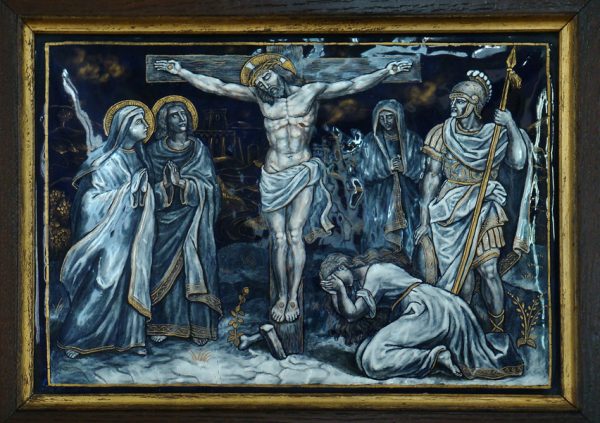
Friday of Holy Week brings the crucifixion of Jesus on Good Friday. This day solemnly demonstrates his sacrifice for our sins. The events of this day can be summed up by recounting the Stations of the Cross, which Royals had the chance to experience on Wednesday.
- Pilate condemns Jesus to death.
- Jesus accepts His cross.
- Jesus falls for the first time.
- Jesus meets His afflicted mother.
- Simon helps Jesus carry the cross.
- Veronica wipes the face of Jesus.
- Jesus falls for the second time.
- Jesus speaks to the women.
- Jesus falls for the third time.
- Jesus is stripped of his garments.
- Jesus is nailed to the cross.
- Jesus dies upon the cross.
- Jesus is taken down from the cross.
- Jesus is placed in the sepulcher.
Catholics are called to connect with and to reflect on the pain, agony and intense suffering that Jesus bore for our own sins and are called to abstain from meat one last time before Easter.
Holy Saturday, or Easter Vigil, recounts Jesus’s burial and his time in the tomb. As stated in the Nicene Creed, Jesus “descended into hell, and on the third day he rose again from the dead.” As Jesus’s Disciples and followers mourned his death, God had another plan.
The next morning, Easter Sunday, celebrates Jesus’s Resurrection from the dead. He emerged from his tomb unnoticed, until the women, who intended to visit his tomb, found it empty. Jesus’s Resurrection celebrates the triumph of life over death, and of God over sin. It proves that Jesus is unstoppable, and that despite all of our sins and the bad decisions we make, he still ultimately wants a relationship with each and every one of God’s children.
Many Royals have enjoyed Holy Week and looked forward to all that it brings and all the ways in which it allows them to connect with their faith. Lindsey Thomas ’27 shared her Holy Week Mass plans and the enjoyment she finds in welcoming newcomers to the community: “I will be spending my Holy Week with my family and attending church with them Thursday, Friday, Saturday and Sunday! My favorite part of the week is Saturday night mass because I get to see people join our Catholic community!” Lindsey continued, “Holy Week has helped me to connect with God more because it is a time of reflection for me on how much God loves me and did so much for me. It’s a reminder of how Jesus died on the cross not only for me but for everybody so that we can have eternal life with Him. Holy Week is my reminder that God loves the world so much that He sent His only son for us!” Lucy Choiseul-Praslin shared about her excitement for the Stations of the Cross that Royals will get to experience on Wednesday: “I am looking forward to getting the chance to experience the journey and the sacrifice that Jesus went through and to celebrate the coming of Easter with the rest of the school.”
Happy Easter, Royals! Enjoy the remainder of Holy Week and bask in the glory of all that Jesus has done for us.